A red battery light that comes on while you are already driving usually does not mean the battery suddenly went bad. It means the charging system is no longer maintaining the electrical system the way it should. From that point on, the vehicle may be running largely on whatever energy is left in the battery.
That remaining time is unpredictable. One car may keep running long enough to reach a nearby repair shop, while another can shut down much sooner because the battery is already weak or the vehicle has a high electrical load. The safest approach is to treat the warning as a charging-system problem that needs immediate attention rather than trying to calculate an exact number of miles.
The Alternator Is Usually the First System We Check
The alternator supplies electricity while the engine is running and keeps the battery charged. If alternator output drops too low, the battery light comes on because system voltage is no longer where the vehicle expects it to be.
A failed alternator is one possibility, but it is not the only one. Internal voltage regulator problems, worn alternator components, damaged wiring, poor connections, or a blown charging-system fuse can produce the same warning. At our shop, we test actual charging voltage and current output before replacing the alternator.
A Broken Serpentine Belt Can Turn This Into an Emergency
The serpentine belt drives the alternator on many vehicles. If that belt breaks or comes off, the alternator immediately stops charging, and the battery warning light can appear.
The bigger concern is that the same belt may also drive the water pump on certain engines. If that happens, the engine can begin overheating shortly after the belt fails. You may also lose hydraulic power steering on vehicles that use a belt-driven pump. If the battery light comes on together with rising engine temperature or suddenly heavy steering, stop driving as soon as it is safe.
There Is No Reliable Safe Mileage After the Light Comes On
How far you can drive depends on battery condition, electrical demand, vehicle design, and the reason charging stopped. A strong, fully charged battery has more reserve than an older battery that was already struggling before the warning appeared.
Modern vehicles also use electricity for engine computers, fuel pumps, ignition systems, electronic transmissions, lighting, cooling fans, and safety systems. As voltage falls, warning lights can multiply, and electronic systems can begin shutting down. Waiting until the engine finally stalls can leave you stopped in traffic instead of safely parked.
Reduce Electrical Load if You Need to Reach a Safe Place
If the vehicle is otherwise operating normally and you are only trying to get out of traffic or reach a very nearby safe location, reducing unnecessary electrical demand can help preserve what battery power remains.
Turn off nonessential accessories such as:
- Seat heaters
- Phone chargers
- Rear defroster
- High-powered audio equipment
- Extra interior lighting
- Climate control if conditions allow
Do not compromise safety to save electricity. Keep headlights on when visibility requires them, and use the windshield defroster if you need it to see clearly. Getting to a safe location is more important than stretching the battery another few minutes.
Do Not Shut the Engine Off Until You Are Somewhere Safe
Once the charging system has failed, the battery may not have enough power left to restart the engine. That means shutting the car off at a gas station or parking lot can turn a running vehicle into a no-start.
If you are already in a safe place, however, there is little reason to keep the engine running just to see how long it lasts. Continuing to drain the battery can make diagnosis more difficult and leave it deeply discharged. Arrange for an inspection or tow rather than repeatedly restarting the vehicle.
Other Warning Signs Mean You Should Stop Sooner
A battery light by itself is concerning, but additional symptoms raise the urgency considerably. Low voltage can cause systems to behave unpredictably as the battery continues to discharge.
Watch for signs such as:
- Headlights becoming noticeably dim
- Multiple dashboard warning lights appearing
- Gauges or displays behaving strangely
- Engine running rough or losing power
- Transmission shifting abnormally
- Burning smell from the engine compartment
- Steering suddenly becoming heavy
- Engine temperature beginning to rise
If several electrical systems start failing at once, you are close to losing enough voltage for the engine to stop running.
Battery and Charging-System Testing Should Be Done Together
Installing a new battery without checking alternator output can leave you with the same warning shortly afterward. Likewise, replacing an alternator without testing a deeply discharged or damaged battery can leave the new charging system working against a weak battery.
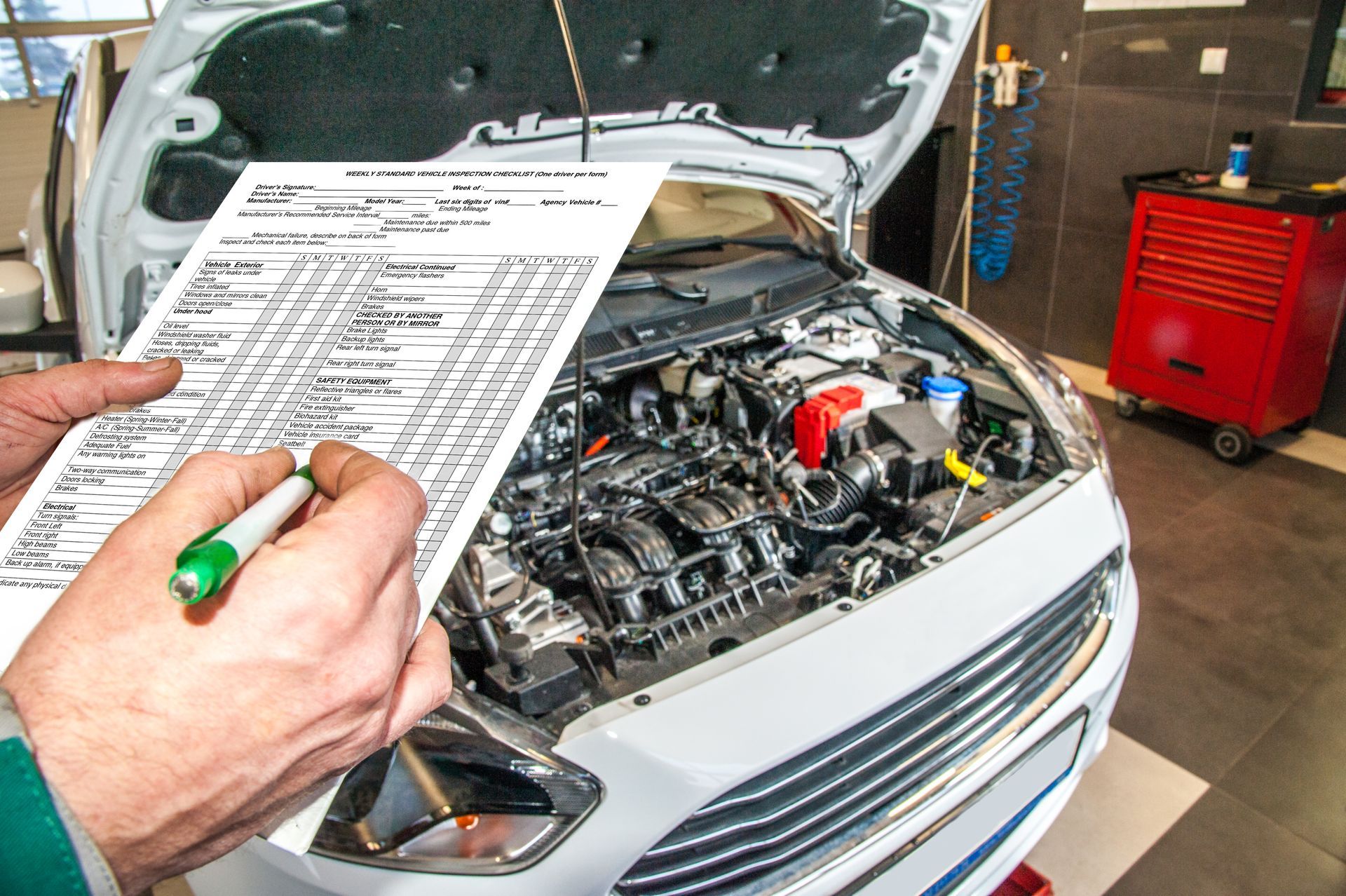
Regular maintenance gives us an opportunity to check battery condition, terminal corrosion, belt wear, and charging performance before a roadside problem develops. Heat can be especially hard on batteries, while colder temperatures expose batteries that have already lost capacity. Testing the complete system tells us whether the problem is the battery, alternator, belt drive, wiring, or a combination of issues.
Get Battery And Charging System Service In Arizona, With Randy's Downtown Garage
If your red battery light comes on while driving, Randy's Downtown Garage can diagnose the charging system at its Phoenix and Flagstaff, Arizona locations and check the battery, alternator, serpentine belt, wiring, and connections.
What Our Technicians Check During Car Inspections For Vehicles Driven In Arizona Heat And Long Miles